

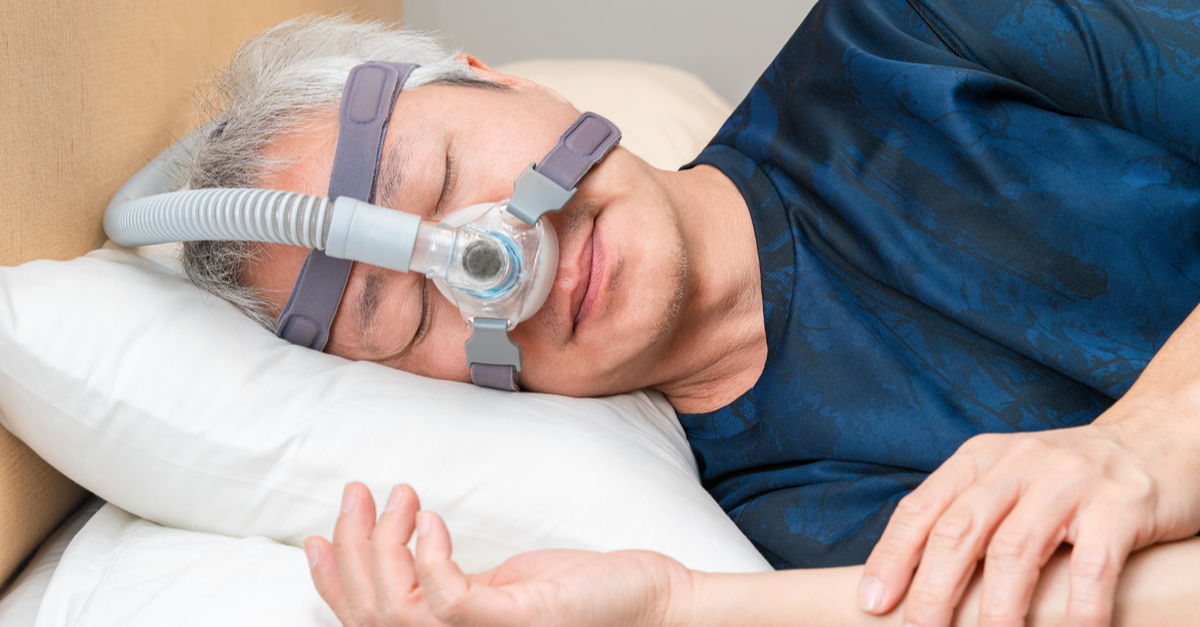
Snoring and other breathing problems that occur during sleep are often caused by obstructive sleep apnea, a condition that causes the relaxing of the muscles at the back of the throat, which either partly or fully block up the airway while the person is asleep. To put it another way, sleep apnea happens when the brain does not adequately activate the muscles which are responsible for breathing when the individual is asleep. To cope with this problem, APAP can provide relief to achieve better sleep.
Meanwhile, patients who suffer from CompSAS or the Complex Sleep Apnea Syndrome are affected by two types of sleep apnea: obstructive and central. These momentary awakenings are often brought on by sleep apneas, also known as halts in breathing.
Continue reading to know more about sleep apnea and its treatment.
Who Is Affected by Sleep Apnea?
A person may have difficulty getting the quantity of restorative sleep they need to operate properly during the day if they wake up often throughout their sleep, even if just for short periods.
About two to nine percent of the general population is affected by sleep apnea. It is also possible that there are millions more people who have the disorder but have not yet been identified as having it.
An untreated individual with sleep apnea may possess a range of symptoms that are only short-term, including snoring that keeps other people awake at night, headaches in the morning, irritability, daytime fatigue, sore throats, and irregular sleep patterns. However, the long-term effects include a higher risk of developing heart illnesses, liver diseases, type 2 diabetes, and metabolic syndrome, in addition to the difficulties that might arise during surgical procedures.
Treatment
After a patient has been given a diagnosis of sleep apnea, the initial step in treating the condition may consist of advising the individual to make changes to their lifestyles. These changes may include losing extra weight, giving up smoking, or reducing their alcohol use or sleeping medications.
One example of a condition for which they may be able to provide assistance is allergy sufferers. In certain situations, a physician may also propose employing a device while the patient is asleep in order to assist in opening the airway. Sometimes, it may be necessary to resort to more extreme treatments like a surgery.
Cure
CPAP devices and APAP machines are the two most prevalent kinds of machines that are used in treating sleep apnea. In order to cure sleep apnea, both APAP and CPAP devices perform the same basic purpose, which is to increase the amount of air that is flowing into the lungs.
Continual positive airway pressure (CPAP) devices are the standard for treatment; however, airway pressure alternate airway pressure (APAP) machines may be more beneficial for specific individuals.
Differences Between APAP and CPAP
A feature that distinguishes an APAP machine from a CPAP machine is the ability of the APAP machine to make adjustments to its settings on its own while the user is asleep. Because of this, it is able to adjust to the varying pressure needs that occur during the night.
If they have a solid understanding of the distinctions between the two devices, patients who suffer from sleep apnea may benefit from visiting a doctor about which of these two devices is best for them.
The apparatus that is used in the delivery of this pressure is referred to as an “automatic positive airway pressure machine,” or APAP. APAP machines, similar to CPAP machines, take in the air via a filter (often also with heating and humidification) and then use a motor to push the filtered air through a tube and onto a face mask. CPAP machines take in air through a filter and then heat and humidify it. APAP devices create what is called an air splint, which keeps the airway from collapsing or being occluded by the tongue, uvula, or soft palate.
If you use an APAP rather than a CPAP, the pressure will be automatically adjusted to fit your needs depending on the amount of breathing resistance it detects at all times. This is in contrast to CPAP machines, which must be adjusted manually. The technology that goes into an APAP machine allows it to maintain a low setting until a change in the patient’s breathing pattern signals that a higher airflow setting is necessary.
Conclusion
Many people who have sleep apnea start out by using a CPAP machine, but if the results aren’t good, they may switch to an APAP. Most of the time, you have to try out different PAP devices before you find the one that works best for you. For instance, you might be able to decide between a CPAP and an APAP by doing a home sleep study or talking to a sleep expert or doctor. However, note that some people may try both PAP machines and decide neither is best for them.
